
FG Urged to Act Fast to Prevent Looming ASUU Strike
NIGERIA’S public university system is facing another potential strike by the Academic Staff Union of Universities (ASUU). The issues have been around for a long time. Since the 2009 agreement between the Federal Government and ASUU, university faculty members have seen their salaries lose value due to high inflation.
Subsequent governments have either ignored the agreement or have enforced it in ways that undermine true negotiation. The results are clear: low morale, reduced productivity, a significant loss of talent, and a history of strikes that embarrasses the nation.
Unfortunately, past presidents Goodluck Jonathan and Muhammadu Buhari and the current administration have opened more institutions while inflation has diminished the importance of the N1.3 trillion agreement made in 2009.
From 2009 to 2022, Nigerian students lost more than three academic years due to lecturer strikes, some lasting eight to nine months.
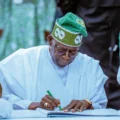
During his election campaign, President Bola Tinubu claimed that ASUU would not strike while he was in office. As a sign of goodwill, lecturers gave him a chance, even though key concerns—academic allowances, university revitalization, and salary adjustments—remained unaddressed. This goodwill seems to be fading.
On Tuesday, ASUU warned of an indefinite strike starting Friday, stating that the government had not resolved the outstanding issues within a month after the last warning strike.
The message is clear: this administration, like those before it, does not feel the urgency to meet its promises to the academic sector.
The consequences of inaction are already severe. Nigerian professors are among the lowest paid in Africa and worldwide. A full professor in Nigeria earns between N500,000 and N700,000 each month, while a counterpart in South Africa makes $4,789, or about N7.18 million monthly.
As lecturers struggle to get by on salaries that barely cover transport and housing, the government promotes the Nigerian Education Loan Fund as a significant achievement. What good is a student loan program when university campuses are closed?
Meanwhile, as current universities deteriorate—lecture halls lacking seats, laboratories missing necessary reagents, libraries without new publications—the government proudly announces the creation of new universities.
This raises important questions: if current institutions do not have enough funding, why add new financial burdens?
The global situation is even more concerning. Nigeria spends less than 7 percent of its annual federal budget on education. In comparison, South Africa allocates about 19 percent of its budget (6.2 percent of GDP) to education, while Ghana spends around 18 to 20 percent.
During the First Republic, the Western Region under Obafemi Awolowo allocated between 28.9 percent and 41.2 percent to education, the largest portion of the budget at that time.
In the United Kingdom, public funding for education is about 5.5 percent of GDP, while the United States averages between 5 and 6 percent, supported by significant state and private investment.
Nigeria is positioned 191 out of 208 countries in the World Top 20 Global Education Index, ranking below countries such as DR Congo, Chad, Niger, and Ethiopia.
The nation has the second-largest population of out-of-school children worldwide, with an alarming total of 20 million.
Every strike exacerbates this crisis. Female students, left stranded for extended periods, become vulnerable to exploitation, while male students may turn to crime or low-paying jobs. Some may never come back to school.
The once-thriving Nigerian university system, which drew students from throughout West Africa and beyond, has now become unappealing.
If action is not taken, the migration of academic talent will intensify. Educators are now taking on extra jobs as Uber drivers, traders, farmers, or consultants just to support their families.
This situation has serious implications. Research contributions have plummeted. Nigerian universities are scarcely represented in international rankings. Prospective teaching talent is seeking opportunities abroad. Countries like Ghana, Rwanda, and even Botswana are now recruiting Nigeria’s finest minds.
Tinubu has proven that funding can be secured when there is a genuine political commitment. Billions are being allocated for Hajj subsidies, presidential jets, luxury vehicles for lawmakers, and questionable constituency projects. These financial resources can be redirected toward education, which is crucial for future prosperity.
Creating a special intervention fund for revitalizing universities and supporting lecturers is not simply a charitable act; it is a vital investment in Nigeria’s future.
The era of treating university lecturers lightly must end. The federal government must fully adhere to the 2009 agreement and promptly compensate for the earned academic allowances. Tinubu needs to deliver on the commitment he made to Nigerian students and their families.
Should another strike occur, history will note that a government capable of funding costly vehicles and religious pilgrimages could not allocate resources to the classrooms that produce future doctors, engineers, and leaders.
Mr. President, please prevent this strike.

DOWNLOAD EXAM SCHOLARS 2025 CBT APP ON THE PLAY STORE
DOWNLOAD EXAM SCHOLARS 2025 CBT APP ON THE APP STORE
DOWNLOAD EXAM SCHOLARS 2025 CBT APP ON WINDOWS
Visit EXAMSCHOLARS.COM for more info