

Nursing is one of the most in-demand professions in Nigeria, and choosing the right college is the first major step in your journey. This article focuses on Top 10 Colleges of Nursing in Nigeria, which are diploma-granting institutions attached to teaching hospitals, rather than university nursing departments.
These colleges are regulated by the Nursing and Midwifery Council of Nigeria (NMCN), and only institutions with valid NMCN accreditation are recognised. Without it, your certificate will not qualify you to sit the licensing examination.
Here is what you actually need to know about the top 10 colleges of nursing in Nigeria.
Top 10 Colleges of Nursing in Nigeria
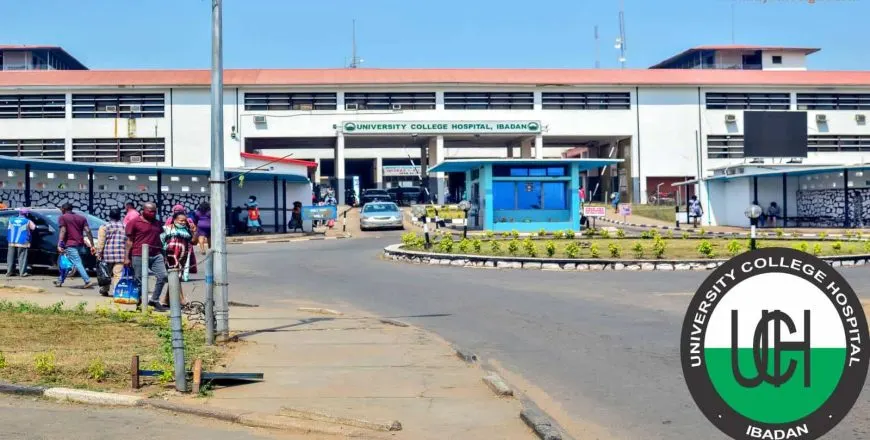
1. School of Nursing, University College Hospital (UCH), Ibadan, Oyo State
Established: 1952
School of Nursing, UCH Ibadan is widely considered the most prestigious nursing college in Nigeria. It runs a three-year Basic Nursing programme leading to the Registered Nurse (RN) diploma. Beyond basic nursing, the school also offers post-basic programmes including:
- Perioperative Nursing
- Midwifery
- Occupational Health Nursing (the only Occupational Health Nursing school in the West Africa)
Students train directly within one of Nigeria’s busiest federal teaching hospitals, gaining exposure to a wide range of complex clinical cases. The school has on-campus hostel accommodation, a computer laboratory, and a library.
Fees are estimated at ₦200,000 – ₦300,000 per session for fresh students, and admission is highly competitive.
2. School of Nursing, Lagos University Teaching Hospital (LUTH), Idi-Araba, Lagos
Established: 1962
LUTH’s School of Nursing offers a four-year programme leading to RN certification, making it one of the few nursing colleges in Nigeria with a four-year structure. It also runs 12-month post-basic specialty programmes in:
- Perioperative Nursing
- Accident and Emergency
- Ophthalmic Nursing
- Paediatric Nursing
The school has trained over 3,000 specialist nurses through these programmes. The school is equipped with an e-library and a simulation laboratory regarded as among the best in any Nigerian nursing college.
Being located in Lagos means students get exposure to extremely high patient volumes and a wide variety of medical cases. Fresh student fees range from approximately ₦230,000 – ₦400,000 per session. The entrance cut-off mark is 200 and above.

3. School of Nursing & Midwifery, Ahmadu Bello University Teaching Hospital (ABUTH), Shika, Zaria, Kaduna State
Established alongside ABUTH
School of Nursing & Midwifery, ABUTH is the top nursing training institution in Northern Nigeria. It runs a three-year Basic Nursing programme with September intake and a Basic Midwifery programme with March intake. The school also offers post-basic programmes in:
- Midwifery (18 months)
- Ophthalmic Nursing (12 months)
- Paediatric Nursing (18 months)
- Anaesthesia Nursing (12 months).
Entrance exams for basic nursing are held in June and for post-basic in December. ABUTH is one of the most affordable top-tier nursing colleges in Nigeria. First year costs are approximately ₦200,000 including accommodation, with tuition alone about ₦40,000.
It is the most competitive nursing institution for students from the North-West and North-Central regions.
4. School of Nursing, Obafemi Awolowo University Teaching Hospital Complex (OAUTHC), Ile-Ife, Osun State
Established alongside OAUTHC
OAUTHC’s School of Nursing offers both basic and post-basic nursing programmes. It is known for its strong focus on public health and community nursing alongside clinical training, which gives graduates a broader skillset than many other schools.
Students train within the OAUTHC facility, which serves a large patient catchment area across Osun and neighbouring states. Graduates from this school perform consistently well in NMCN licensing examinations.
It is a top choice for students in the South West who are looking for an alternative to Lagos-based institutions.
5. School of Nursing, University of Nigeria Teaching Hospital (UNTH), Enugu
Established alongside UNTH
UNTH School of Nursing is the leading nursing college in the South East. It offers a three-year General Nursing Programme combining classroom work, lab sessions, and hands-on clinical experience. The school is known for its strict academic discipline and high standards.
Admission is extremely competitive, as only about 60 students are offered places each year out of thousands of applicants, with a small number placed on a waiting list. The entrance exam is conducted via CBT.
It is the most sought-after nursing training institution for students in Enugu, Anambra, Imo, Abia, and Ebonyi states.
6. School of Nursing, University of Benin Teaching Hospital (UBTH), Benin City, Edo State
Established alongside UBTH
UBTH is one of Nigeria’s largest teaching hospitals, and UBTH School of Nursing benefits from that scale. Students undergo rotations in
- general
- surgical
- emergency
- and specialist nursing care across a high-volume hospital environment.
The school is the primary nursing training institution for the South South zone, drawing students from Edo, Delta, Bayelsa, Rivers, and neighbouring states. Post-basic programmes are also available through the hospital.
It is NMCN-accredited and has a consistent record of producing competent nurses ready for both local and international practice.
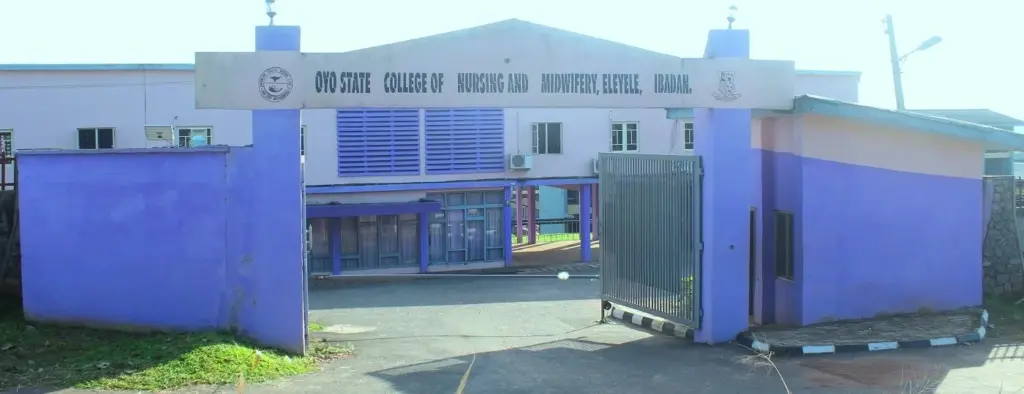
7. Oyo State College of Nursing and Midwifery (OYSCONME), Eleyele, Ibadan, Oyo State
Established: 1949
OYSCONME is one of the oldest government-run nursing colleges in Nigeria. It offers both Basic Nursing and Basic Midwifery, and Community Nursing programmes across its main campus in Eleyele, Ibadan, and a second campus in Kishi. With a student population of approximately 1,110, it is one of the largest nursing colleges in the country.
Admission into the three-year programme requires passing a CBT-based entrance examination. Candidates must be at least 17 years old at the time of admission. At the end of training, students sit both the college’s internal examinations and the NMCN final qualifying examinations.
8. Anambra State College of Nursing Sciences (ASCONS), COOUTH, Nkpor, Anambra State
Established alongside COOUTH, Nkpor
ASCONS, affiliated with Chukwuemeka Odumegwu Ojukwu University Teaching Hospital (COOUTH), is the flagship nursing college in Anambra State and the most prominent of the several NMCN-accredited nursing colleges across the state. It offers both Basic Nursing and Midwifery programmes.
Students benefit from training within a busy teaching hospital environment in one of the most healthcare-active states in the South-East. Anambra State as a whole is notable for having multiple NMCN-recognised nursing colleges, making it one of the leading states for nursing education in the region.
9. Akwa Ibom State College of Nursing Sciences, Akwa Ibom State
Established as a college in 2021 (consolidated); NMCN/NBTE accredited 2024
The Akwa Ibom State College of Nursing Sciences was formed by merging several independent nursing training schools across the state. In 2024, it received dual accreditation from both the NMCN and the National Board for Technical Education (NBTE), authorising it to offer National Diploma (ND) and Higher National Diploma (HND) programmes.
It operates across five campuses; Oron, Anua, Eket, Ituk Mbang, and Ikot Ekpene, making it one of the most geographically accessible nursing colleges in Nigeria. The multi-campus structure means students can train close to home while still receiving standardised, accredited education.
10. Nigerian Army College of Nursing, Yaba, Lagos State
This college operates under the Nigerian Army Medical Corps. The Nigerian Army College of Nursing is a unique military-affiliated institution open to both civilian and military applicants.
It is accredited by both the NMCN and the NBTE, and runs a four-year programme leading to National Diploma (ND) and Higher National Diploma (HND) qualifications, after which graduates can obtain RN and RM certification. The learning environment is structured and disciplined, which many graduates credit for building strong professional habits.
Admission requires a JAMB UTME score with a cut-off that has ranged between 160 and 180 in recent sessions, alongside five O-level credit passes in the core science subjects.
Read also: Complete List of Approved Nursing Schools in Nigeria (NMCN Accredited) 2026
Nursing Schools in Nigeria: Complete Admission Requirements (2026 Guide)
Nigerian College of Nursing Admission Requirements
Getting in requires preparation across a few key areas. Here’s how to gain admission into school of nursing, Nigeria:
- O-Level Results: Five credit passes in English Language, Mathematics, Biology, Chemistry, and Physics, in not more than two sittings. Top schools prefer one sitting.
- Application Form: Released annually between January and August. Forms cost between ₦5,000 and ₦15,000. Always buy directly from the institution.
- Entrance Examination: Every college conducts its own internal exam, mostly via CBT. JAMB is not required by most hospital-based colleges, but is compulsory for colleges running ND/HND programmes under NBTE.
- Oral Interview & Medical Screening: Candidates who pass the exam face an interview and must present a medical fitness certificate before final admission is confirmed.
All programmes lead to the Registered Nurse (RN) certification after successfully passing the NMCN licensing examination at the end of training.

Nursing School Entrance Exam General Past Questions are now available on the Exam Scholars CBT Practice App. This is your best bet at passing the exam and gaining admission this year.
Conclusion
If you’re choosing a college of nursing in Nigeria, focus on NMCN accreditation, the quality of the affiliated teaching hospital, available programmes, fees, and location. The institutions on this list represent the best combination of these factors in 2026. With the right preparation, a career in nursing offers real job security, professional fulfilment, and strong opportunities to practise internationally.





Pingback: LUTH School Of Nursing Post UTME Form 2026/2027 (ND/HND): How To Apply Now | Exam Scholars- JAMB Exam