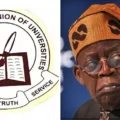

FG vs ASUU: Building Sustainable Solutions Beyond Strikes
Last month, the Academic Staff Union of Universities (ASUU) ended its two-week warning strike. This allowed the Federal Government a month to finalize the renegotiation of the 2009 FG-ASUU Agreement and address other important issues in the nation’s university system. This was the 18th industrial action in the last 26 years, resulting in about 1,130 days lost in academic activities. While the Federal Government shares responsibility for the problems in education, ASUU’s methods have become contentious, with little progress made through its strikes.
Although ASUU’s two-week warning strike has been paused for further discussions, this should not be mistaken for a resolution. During tough economic times, when students’ futures are uncertain, both the government and unions have a responsibility to the public that goes beyond protest. They must provide Nigerians with a path for sustainable, peaceful, and effective solutions. Arbitration and other organized methods can improve dialogue and help resolve stalemates, restoring confidence in the university system.
After the ASUU National Executive Council (NEC) meeting in Abuja, ASUU President Professor Chris Piwuna warned that the union would not hesitate to restart the strike if the government does not meet its demands within the month.
Piwuna detailed the union’s demands, which include finalizing the updated 2009 FGN-ASUU Agreement based on the Nimi Briggs Committee’s Draft Agreement from 2021. Other demands are the payment of three-and-a-half months’ withheld salaries due to the 2022 strike, and payment of unpaid salaries for staff on sabbatical, part-time, and adjunct roles affected by the Integrated Payroll and Personnel Information System (IPPIS). Additional requirements include releasing outstanding third-party deductions for pensions, dues, and cooperative contributions; funding to revitalize public universities; and settling unpaid amounts from a 25 to 35 percent salary award over 12 months.
Piwuna recalled that ASUU announced the warning strike on October 13, 2025. He stated, “When we met here about 10 days ago to reluctantly declare a warning strike, it was a choice made out of necessity. The government had ignored our ongoing attempts to address issues vital to the survival of Nigeria’s public universities.” He added that after the strike began, the Federal Government re-engaged with the union through a team led by Alhaji Yayale Ahmed, which met with ASUU representatives on October 16 and 18 to discuss feedback on the draft renegotiated agreement.
According to Piwuna, while the talks did not resolve every issue, the union recognized that significant progress had been made compared to the time before the strike. He said, “We have not achieved all our goals, but we are certainly better off than we were before the strike started. This shows that had the government acted sooner, the strike could have been avoided.”
The Federal Government, through the Minister of Education, Tunji Alausa, claimed that since President Bola Tinubu took office, the government has been engaged with ASUU and that the strike was unnecessary. He provided a long list of initiatives from the Tinubu administration, including a N683 billion budget allocation for infrastructure in federal tertiary institutions in 2025, aimed at improving hostels, lecture halls, laboratories, and workshops.
He emphasized that the government has also raised funds for medical schools, training for academic staff, and student support through NERF and other initiatives. He blamed ASUU leaders for delays in distributing needs-assessment funds by insisting that the initial funding should go entirely to the union, rather than being shared with polytechnics and colleges of education. Regarding promotion arrears, third-party deductions, and other pending matters, Alausa stated that most concerns have been resolved or addressed, while some issues are specific to individual universities.
Additionally, the Federal Government announced on Wednesday that it would allocate N2.3 billion to settle salary and promotion arrears owed to lecturers at Nigerian universities, aiming to prevent a potential strike by ASUU. Alausa stated that this disbursement shows President Tinubu’s commitment to resolving long-standing welfare issues in tertiary education sustainably. He explained that the FG, through the Ministry of Finance and the OAGF, is close to finalizing third-party non-statutory deductions and pension contributions, which should be completed soon.
He noted that the Yayale Ahmed Negotiating Committee continues to act as a link between the Federal Government and university unions to address unresolved welfare issues through honest and respectful discussions. “Negotiations are ongoing sincerely, collaboratively, and with respect,” he stated. “Our focus is to ensure all issues are handled responsibly and within the approved budget to maintain long-term stability.”
For many years, ASUU has defended its strikes as a way to pressure the government to meet commitments for better funding, fair salaries, and improved infrastructure. These requests are valid. In a country where a professor earns an average of $366 (about N500,000) monthly, which is much lower than their counterparts in other African nations, and where facilities are deteriorating, the exchange of knowledge is severely limited.
While the sources of conflict are clear, it is positive to see both sides pursuing a lasting resolution. The solution depends on honesty from both parties. Government officials must stop making empty promises and start carrying out meaningful reforms. ASUU must adopt modern negotiation methods that prioritize student interests. Students should also engage in constructive activism to hold all parties accountable.
Education is not a privilege; it is a right guaranteed under Section 18 of Chapter 2 of the Nigerian Constitution. Each disruption costs a generation part of its potential. The government and ASUU must recognize that time cannot be restored. Every month lost to a strike is a lasting scar for students. Therefore, education should be treated as a national emergency and not as a political bargaining chip. Lives are affected due to personal conflicts, while the future of the nation hangs in the balance.
It is essential to build a mutual understanding among the parties, focused on a commitment to Nigeria’s development. This can prompt a major reevaluation and change in how conflicts are managed concerning industrial disputes. Moving forward, there should be quick, rules-based decision-making, a clear implementation plan, and a rebuilding of trust to reduce excessive industrial actions across all sectors. The goal is not to force compliance or placate but to create lasting, verifiable resolutions that benefit Nigerian students and the future workforce. Arbitration and structured dialogue, supported by transparent governance and accountability, can turn occasional crises into ongoing progress. Frequent strikes lead to exploitation and provide no benefits, only causing harm to all parties involved.

DOWNLOAD EXAM SCHOLARS 2025 CBT APP ON THE PLAY STORE
DOWNLOAD EXAM SCHOLARS 2025 CBT APP ON THE APP STORE
DOWNLOAD EXAM SCHOLARS 2025 CBT APP ON WINDOWS
Visit EXAMSCHOLARS.COM for more info