

Exam Bodies Embrace CBT in a Hurry—But Are the Downsides Being Ignored?
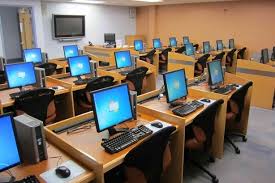
Exam bodies seem committed to embracing the full computer-based test (CBT) despite its inherent drawbacks.
The West African Examinations Council (WAEC) and the National Examinations Council (NECO) were instructed by Education Minister Tunji Alausa in April to implement complete CBT for all of their exams by 2026.
According to the minister, the system must be implemented in order to prevent exam fraud and to guarantee more equitable, safe, and effective testing.
Despite major concurrent obstacles and stakeholder concerns, Nigerian examination authorities like WAEC and NECO are moving to CBT in response to the instruction.
Although CBT may reduce malpractice and streamline procedures, stakeholders contend that its rollout is being hurried without sufficient infrastructure, computer knowledge, or access for all applicants.
The West African Examination Council (WAEC) was recently ordered not to use CBT as an examination method in 2026 by the national parliamentarians looking into the council over the widespread anomalies and operational shortcomings that marked the 2025 Senior Secondary School Certificate Examination.
According to the MPs, Nigeria is unable to implement CBT exams for secondary school pupils by 2026.
Similarly, teacher Gift Osikoya thinks that the intention to use CBT for WAEC and NECO exams by 2026 is a smart way to stop exam cheating, particularly in a time when technology is taking over.
Nonetheless, she stated that a thorough analysis of the policy’s applicability and inclusivity is necessary.
In addition to lacking enough computers, many schools, especially those in remote areas, lack basic amenities like dependable energy and internet connection.
According to her, “implementing CBT without closing this infrastructure gap could increase educational inequality and deprive students in underserved areas.”
Although CBT can eliminate some forms of malpractice by doing away with paper answer sheets and minimizing human intervention, Osikoya emphasized that if cybersecurity is not prioritized, it also poses new threats like hacking, impersonation, or technical manipulation.
In a study titled “Assessment of Challenges of CBT among Students in the Nigerian Educational System,” Joseph Fehintola, a scholar from the University of Ibadan, found that many candidates lack sufficient ICT skills because many hamlets, villages, and towns lack electricity, with the majority of these locations not being connected to the electrical grid.
Because there is no electricity to run computers, let alone teach them how to use them, a large number of the nation’s secondary school dropouts lack computer literacy.
Even many elementary and secondary school teachers are unable to start a computer without mentioning the use of any applications. “How would a teacher who is computer illiterate teach computers?” asked Fehintola.
Now the question is, how would a teacher who is computer illiterate teach computers, and the pupils would undoubtedly lack the necessary tools for cognitive behavioral therapy?
In Nigeria, an erratic power supply poses a significant challenge to the CBT exam method, impeding its seamless functioning and affecting student performance.
The nation’s ecosystem is prone to unpredictable power outages, which can interfere with exams, destroy data, and erode students’ trust in technology.
Nigerian University of Technology and Management (NUTM) academic planning director Nubi Achebo voiced concerns that the government would be making this move too quickly without enough planning, which could fail.
“There may be advantages to switching to CBT, but a successful implementation depends on resolving the accessibility issues and current infrastructure,” he stated.
In actuality, Achebo maintains that CBT will not end exam misconduct since students can still use technology to cheat.
He urged the government to set up massive digital literacy initiatives for teachers and students, as well as to give priority to providing public schools with the ICT resources they need and a reliable power source.
In addition, he stated that in order to prevent kids from being excluded, the government has to think about implementing a hybrid examination model that combines both paper-based and cognitive behavioral therapy throughout the transition time.
“There may be advantages to switching to CBT, but a successful implementation depends on resolving the accessibility issues and current infrastructure,” he stated.
In actuality, Achebo maintains that CBT will not end exam misconduct since students can still use technology to cheat.
He urged the government to set up massive digital literacy initiatives for teachers and students, as well as to give priority to providing public schools with the ICT resources they need and a reliable power source.
In addition, he stated that in order to prevent kids from being excluded, the government has to think about implementing a hybrid examination model that combines both paper-based and cognitive behavioral therapy throughout the transition time.
There are roughly 23,550 secondary schools in Nigeria, which are separated into junior and senior secondary levels and are a part of a formal six-year secondary education system.
In secondary schools in Nigeria, computer use is not common, and access differs greatly between public and private institutions as well as between rural and urban areas.
The Universal Basic Education Commission reports that only 36% of Nigerians use the internet, 78% of children lack digital literacy, and 50% of public schools in the country lack digital infrastructure.
Before adopting CBT as the nation’s exam format, this must be resolved in order to prevent endangering the future of the youth in the name of reducing exam misconduct.
About 1,973,253 pupils from 23,554 schools across the country will take the CBT exam, according to Amos Dangut, chairman of the Nigeria National Office of WAEC.
He revealed that about 994,025 applicants would be female (50.37 percent) and 979,228 candidates would be male (49.63 percent), demonstrating a persistent increase in female involvement.
74 courses and 196 papers will be included in the CBT exam, he said, with more than 26,000 senior secondary school teachers serving as supervisors around the country.
“I know there is a written paper, but I’m not sure how WAEC intends to proceed. Will the theory be written by the students using computers, or will it be eliminated and reduced to a multiple-choice task?
WAEC must be explicit about this. If CBT is the best option, WAEC can begin, but it will need to launch a significant marketing campaign among students and schools to ensure that the transition is not unfamiliar to those taking the test, communication specialist Chukwudinma Okoji told BusinessDay.
He contends that since no system is flawless, there is a need to have some faith in the testing organizations to establish a solid foundation that will serve as a springboard for the nation’s higher education system.
“In the US and other developed nations, bugs occur and are fixed. There is no reason to crucify them because Jamb also fixed the problem,” Okoji stated.
According to Charles Adewale, a lecturer in the communication department at Caleb University in Lagos, JAMB did not adopt the nationwide CBT exam hastily.
But I blame JAMB for not responding quickly enough to the objections that greeted the results’ announcement,” he remarked. All parties involved in the Nigerian education system should support and encourage CBT, he said.
Additionally, he thinks CBT will improve over time. Adewale stated, “It’s innovative, and we shouldn’t let these early setbacks prevent us from enjoying the inherent benefits.”
2025 simulated UTME error as a guide
The results of the CBT exam would have been accurately predicted if the 2025 mock Unified Tertiary Matriculation Examination (UTME), administered by the Joint Admissions and Matriculation Board (JAMB) on April 10, had been a prophet.
This was because many analysts felt that JAMB had adequate time to fix the lengthy delays and logistical errors that plagued the mock UTME.
However, JAMB did not promptly resolve the issues that were observed during the 2025 simulated UTME, which was indicative of what applicants encountered throughout the CBT tests.
In order to test new systems and provide potential candidates a chance to become acquainted with the CBT format before the actual UTME, JAMB holds mock UTMEs every year.
200,115 applicants initially signed up for the practice test. However, the number dropped to 200,113 as two candidates later withdrew.
On the day of the simulated UTME, 73,844 candidates were not present, and 88 candidates failed the biometric verification process.
The mock UTME was completed by 126,181 students in total, and about 115,735 of those candidates were able to view their results, which are now online.
JAMB processed and released roughly 10,446 results later, which also sparked some speculation regarding the reason for the delay.
In a statement, JAMB spokesperson Fabian Benjamin admitted that certain applicants encountered exam delays.
He also admitted that these difficulties were expected, given the introduction of new features intended to enhance the main UTME’s overall performance.
He claims that the mock test is an essential prelude to the UTME, allowing JAMB to test new ideas and give applicants a useful taste of the CBT setting.
The outcome of the 2025 UTMB, however, shows that JAMB is unable to learn from its own simulated UTME, which is used to assess JAMB’s institutional and applicant readiness.
Cost Consequences
The way Nigerian examination boards generate cash is another concerning aspect of the CBT approach.
Although these testing organizations are nonprofit, the exam’s price is rising each year. Demonstrating the growing inflationary pressure on Nigerian non-profit organizations.
The moral burden on the examination bodies has also increased due to rising costs; many people wonder if JAMB, WAEC, and NECO should truly concentrate on increasing revenue at a time when the majority of parents are finding it difficult to make ends meet.
“I’m not sure if it should produce money, but I believe that they are non-governmental organizations that are unable to do so.
Therefore, I think that sales of forms continue to generate income for them even after all these years. However, to make the form affordable for students, the government ought to subsidize its cost,” Okoji stated.
For example, the government authorized N3,500 for registration in 2019–2020. But it was at a discounted price.
The JAMB governing board chairman at the time, Emmanuel Ndukwe, revealed that the cut was a result of suggestions made to the government by the board and management since it was getting harder for some parents to pay the N5,000 that JAMB was charging at the time.
But in recent years, that expense has steadily increased, primarily as a result of inflation.
While overseas candidates were charged $30, JAMB charged candidates approximately N8000 in 2024.
“The 2024 UTME registration fee is N7,700 with a mock and N6,200 without a mock.”
But in 2025, the cost was raised to roughly N9000, as per JAMB’s official communication channel.
The following represents the cost implications for the 2025 UTME/DE Registration: 1. The Mock-N8,700 UTME 2. UTME without the 200, Mock-N7, 3. Future Candidates’ Mock Trial Testing (N3,500, JAMB stated on its official X handle, “4. DE-N5, 700.”
CBT centers as the foundation
The UTME is an entrance exam that prospective students take each year to gain admission to Nigerian postsecondary institutions.
Approximately two million applicants took the UTME in 2025. For the 2025 UTME, the exam authority also used 887 CBT centers spread throughout the nation’s 774 Local Government Areas (LGAs).
This implies that more than 2000 applicants were anticipated at each of the authorized CBT locations nationwide.
This also brought up the problem of the centers’ capacity and the logistical snags that greeted the 2025 UTME.
The position of stakeholders
After the current JAMB experience, many stakeholders have questioned WAEC’s announcement to adopt the full CBT route in 2026.
For example, the Education Rights Campaign (ERC) denounced as unfair the practice of JAMB sending applicants to remote centers for the UTME.
In a statement, ERC’s deputy national coordinator, Ogunjimi Isaac, stated, “First and foremost, we have to make the point that the officials of JAMB need to understand that they are working with an examination body dealing with young adults.”
According to Johnson Ibidapo, a social psychologist and development consultant at Caleb University in Lagos, applicants who did not get the necessary benchmark score may experience severe emotions of anxiety, despondency, or guilt as a result of the previous UTME, BusinessDay said.
“Youth can develop the resilience required for long-term personal and professional success by promoting realistic self-appraisal, emotional regulation, and candid conversations about failure,” he said.
According to him, parents must assist in raising resilient children, and the most affected group may require the services of psychologists for mental health care.
He claims that overindulgence is a problem that makes Nigerian pupils less resilient to adversity.
Additionally, he thinks that because today’s parents protect their kids from adversity, many young people aren’t taught resilience or how to deal with failure.
Ibidapo stated that “overprotection, unrealistic expectations, and the Gen-Z mentality of expecting perfection are the causes of lack of psychological preparedness.”
The 2026 goal for a complete switch to CBT in both WAEC and NECO was deemed unreasonable and unfeasible by Haruna Danjuma, national president of the Parents-Teachers Association of Nigeria (NAPTAN).
This comes after Education Minister Tunji Alausa ordered that WAEC and NECO make a complete switch to CBT by May or June 2026.
A worried parent told BusinessDay, “As a parent, I found it unacceptable that those in government are usually not sensitive to the reality of our collective realities.”
He claims that the examination board has neglected to address the long-standing problem of the present JAMB problems.
“I wrote JAMB in 2000, and about 18000 results were said to be unscannable by JAMB that year. Subsequent years have also seen candidates miss admission over technical glitches; yet the examination body carries on each year without addressing the challenges,” he said.

DOWNLOAD EXAM SCHOLARS 2025 CBT APP ON THE PLAY STORE
DOWNLOAD EXAM SCHOLARS 2025 CBT APP ON THE APP STORE
DOWNLOAD EXAM SCHOLARS 2025 CBT APP ON WINDOWS
VISIT EXAMSCHOLARS.COM for more info