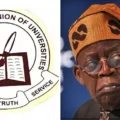

Don’t Blame ASUU: Inside Nigeria’s University Crisis
Whenever the Academic Staff Union of Universities (ASUU) goes on strike to demand action from the government, students, parents, ASUU members, and even the government face distress due to interruptions in university activities. However, ASUU often receives blame from various stakeholders who mistakenly believe that alternatives to striking exist and that the union should consider different solutions.
This view is unhelpful and assumes that ASUU enjoys striking. The media frequently highlights the number of strikes the union undertakes without providing context about the ongoing unresolved issues between ASUU and the government. This portrayal often makes the union seem stubborn, while the government appears indifferent.
So, what are the real issues? In the 1970s, the federal government took over all universities, abolishing tuition fees in 1975. This policy still stands today. As a result, students at federal universities pay various other fees instead of tuition. Many people confuse the increases in these charges with tuition increases.
At no point has ASUU pressured the government to keep tuition free. However, tuition is a vital part of the university system because it covers teaching, labs, workshops, and essential infrastructure for students. If tuition is free, the government must cover these costs, but when funding is low, it negatively affects the learning experience.
This lack of funding prevents universities from fulfilling their curricular responsibilities, which leads to students losing out and affects the quality of graduates. This is a key part of the issue. Those who think poor graduate quality comes from outdated curricula misunderstand curriculum and how it is delivered. The core elements of curricula for programmes worldwide have largely stayed the same.
Speaking of the federal government’s free tuition policy, we should look at Section 18(3) of the 1979 and 1999 Constitutions, Chapter II, which addresses Fundamental Objectives and Directive Principles of State Policy. This section states that the government should strive to eliminate illiteracy and, when possible, provide free compulsory and universal primary education, free university education, and free adult literacy programmes.
The phrase “when practicable” in this provision means it is conditional, so the government cannot be held liable for not meeting this expectation. Nevertheless, the government’s free tuition policy aligns with this aim. Over the years, it has become clear that maintaining a no-tuition policy is impractical due to the federal government’s insufficient funding for public universities, which hinders effective tuition management.
The government’s refusal to recognise this reality shows a lack of sincerity. ASUU, which cares about people’s welfare, cannot support reintroducing tuition fees for students, many of whom come from low-income families that struggle with even minimal increases in fees.
Additionally, the union sees that addressing waste and high governance costs, along with ongoing corruption, could free up funds to properly support federal universities and maintain the free tuition policy.
I know that state universities charge relatively low tuition, which is why they can end up being more expensive than private universities. Private universities charge more because they don’t receive government funding. Despite there being 274 universities—74 federal, 67 state, and 159 private—public universities have higher enrolment due to their lower costs.
Since education is a public service, all levels of government must significantly increase their education budgets, aiming for the UNESCO-recommended minimum of 26 per cent. The policy to freeze the establishment of new universities is understandable, but there is a pressing need for government scholarships and bursaries for students in higher education, in addition to the current loans programme.
Regarding the ongoing conflict between the Federal Government and ASUU, the union went on an eight-month strike in 2022 after President Muhammadu Buhari’s administration failed to ratify an agreement about university funding and faculty working conditions. This was after multiple renegotiations of the 2009 agreement with three successive government committees led by Dr Wale Babalakin, Professor Jibril Munzali, and Professor Nimi Briggs, starting in 2017.
A mix of executive and judicial actions ended the eight-month strike, but the primary issues stayed unresolved. Near the end of Buhari’s term, salary increases of 25 per cent and 35 per cent were given to various federal workers, including academics. The 2023 budget also allocated N50 billion for earned academic allowances for university lecturers.
This current administration under President Bola Tinubu released this amount this year, but cut it by 20 per cent to also cover allowances for non-academic staff. However, the document negotiated by Nimi Briggs, currently with the Tinubu administration, needs a review based on today’s economic conditions and should be signed for implementation as per the agreed terms.
Some adjustments were made to this document, with Alhaji Yayale Ahmed leading the government’s team, pending government approval, since December 2024. The union has been patient while awaiting government action on this matter, despite its members facing difficult working conditions. Meanwhile, the federal government has raised judges’ salaries by 300 per cent without negotiation.
Now, the same government, through the Minister of Education, Dr Tunji Alausa, has arbitrarily offered only a 25 per cent increase on the already insufficient academic salaries, a decision that has faced public criticism for years and ignores the proposed salaries in the negotiated agreement. This action is frustrating and dismissive and undermines the principles of collective bargaining valued by the union.
What does ASUU want? Their demands include (1) adequate funding for public universities to revitalise them and ensure their operational capacity, recognising the university’s vital role in national development; (2) university autonomy to allow more freedom in managing internal matters; (3) payment of outstanding salary arrears for one year (January–December 2023) tied to the salary increases for federal employees; (4) payment of third-party deductions from members’ salaries, which represent savings in cooperatives; and (5) improved working conditions, particularly better salaries for academic staff.
The government’s reaction to ASUU’s strike, through the no-work-no-pay policy, is hasty, unhelpful, and harmful. The minister who made this announcement lacks historical understanding. If they did, they would know that ensuring the university system operates properly has been ASUU’s goal for many years, even during military rule characterised by oppression and arbitrary closures.
The union has remained steadfast and focused on its objectives, hoping that the political elite will see the urgency of resolving these issues. It is essential and urgent to genuinely address ASUU’s demands. The president understands the union’s fundamental goals, and in keeping with his renewed hope agenda, he should quickly approve the agreement made with the federal government under the Yayale Committee for the benefit of the nation.
Prof. Eromosele is a former Deputy Vice-Chancellor at the Federal University of Agriculture, Abeokuta.

DOWNLOAD EXAM SCHOLARS 2025 CBT APP ON THE PLAY STORE
DOWNLOAD EXAM SCHOLARS 2025 CBT APP ON THE APP STORE
DOWNLOAD EXAM SCHOLARS 2025 CBT APP ON WINDOWS
Visit EXAMSCHOLARS.COM for more info