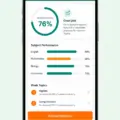

Introduction: Why CBT students miss marks even after “studying”
For WAEC, NECO, and JAMB CBT, many students do not fail because they never studied. They usually lose marks because they repeat the same mistakes, struggle with recalling the right steps quickly, and do not practise with real time pressure.
This guide gives you one clear solution: a simple 2-week study plan (14 days) built around diagnosing your weak areas, using an error log, and improving speed through timed question practice. The goal is straightforward—answer faster with fewer recurring errors.
Primary idea: Fix what causes your repeat mistakes
CBT is not only about knowing content. It is about your ability to recognize the question type, apply the correct method, and avoid careless reading or calculation slips.
Before you begin the 14-day plan, identify which category you most often fall into:
- You know the topic but choose the wrong option under time pressure.
- You miss the same pattern (for example, interpretation questions, equations, ratios, grammar roles).
- You forget quickly because you mostly reread notes instead of practising with questions.
- You practise without tracking, so your mistakes do not shrink.
The plan below is designed to make your preparation measurable: you will log errors, practise the exact weak areas, and review wrong answers like a coach.
What you will be able to do by Day 14
By the end of two weeks, you should be able to:
- List your top 5 weak topics/question types based on real question errors.
- Practise your weak areas with short timed sets instead of long reading sessions.
- Use a mistake-based review loop (wrong → diagnose → fix → practise again).
- Reduce careless errors such as misreading, wrong units, or choosing the nearest option.
Before Day 1: Create a CBT “Error Log” (10 minutes)
You do not need expensive apps. A notebook is enough. Your error log is the tool that turns random revision into real improvement.
Set up these columns:
- Subject/Topic
- Question type (example: “English comprehension inference”, “Equations”, “Ratio & proportion”)
- Your wrong answer
- Correct answer
- Why you missed it (pick one):
- Misread question
- Wrong formula/method
- Calculation error
- Forgot concept
- Guessed
- Time management
- Fix for next time (one short sentence)
Rule: If you cannot write why you missed the question, you will likely repeat the same mistake later.
Week 1 (Days 1–7): Diagnose + practise weak areas with timers
Week 1 is for clarity. You are not trying to cover everything. You are identifying what steals your marks and training the brain to respond correctly and faster.
Day 1: Baseline test + record wrong questions
- Choose one exam for now (WAEC/NECO CBT OR JAMB CBT).
- Pick one subject you struggle with most.
- Do a short timed test (start with 20–30 questions).
- For every wrong question, fill your error log.
Output for Day 1: a clear list of your weak topics/question types and the reasons you missed them.
Day 2: Focus session on your #1 weakness
- Select the single weakness you recorded most in your log.
- Practise only that pattern (aim for 25–40 questions).
- After each set, update your log with your “Fix for next time”.
CBT tip: Do not get stuck on one question for too long. If you cannot reach a method quickly, make a decision, move on, and return only if time allows.
Day 3: Same weakness + method drill
- Practise the same weak area again.
- Add method practice while answering.
- For science/math-like subjects: write the correct steps/formula on your scratch paper (even briefly), then answer the next question.
- For English/Commerce/Government-type subjects: identify the skill needed (definition, inference, explanation, grammar role) and practise questions targeting that skill.
Day 4: Mixed set (weakness #1 and #2)
- Do a mixed practice set: 60% from weakness #1 and 40% from weakness #2.
- Time yourself more strictly than Day 2.
- Record errors again in your log.
Day 5: “Wrong-answer workshop” (most important day of Week 1)
- Revisit only the wrong questions you logged.
For each wrong question, ask yourself three things:
- What key word/clue did I miss in the question?
- What method should I have used?
- Where exactly did the error happen? Concept? Calculation? Reading?
Goal: convert wrong answers into future marks by building a specific fix, not just “I’ll try again”.
Day 6: Timed practice set + adjust your approach
- Do another CBT-style timed set.
- After the set, check your error log and see what is repeating.
- Adjust based on the pattern (misreading, wrong method, careless unit mistakes, etc.).
Day 7: Review lightly + rest
- Review your top mistakes again (short and focused).
- Practise only one short set.
- Rest your brain. Overdoing without correction can stop improvement.
Week 2 (Days 8–14): Improve speed, reduce careless errors, and practise exam conditions
Now that you know your weak areas, Week 2 focuses on performance: speed, decision-making, and fewer careless slips.
Day 8: Work on your top 3 weaknesses together
- Create three sections in your practice:
| Section | Focus | Time/Question Share |
|---|---|---|
| A | Weakness #1 | ~40% |
| B | Weakness #2 | ~35% |
| C | Weakness #3 | ~25% |
Time each section and track whether errors decrease.
Day 9: Fix careless mistakes (use this checklist)
Before choosing an option, quickly run through this checklist:
- Question type? (definition, calculation, interpretation, grammar role)
- What is being asked? Mentally underline key words.
- Units/format right? Examples include tense, measurement units, currency-style wording, or written format.
- Reasonableness check: Is the answer too high or too low compared to the question context?
Then practise short sets and apply the checklist every time.
Day 10: Speed practice without panic
- Choose one subject.
- Practise with a stricter pace than Week 1.
- If you notice panic, pause your breathing for a second—panic slows you down and increases errors.
Day 11: Partial exam simulation
- Do a half-exam simulation: timed and in one sitting.
- After it ends, review only the wrong answers (don’t restart full revision).
Day 12: Repeated practice of the hardest pattern
- From your log, pick the question type with the highest error rate.
- Practise it repeatedly until your error reason changes.
- For example, if you were “forgetting concept”, aim to shift the errors toward “time management” or smaller calculation issues that are easier to fix.
Day 13: Mixed revision + selective reading
Instead of rereading everything:
- Read your weak-topic summaries only for 30–45 minutes.
- Immediately follow with timed questions on those exact topics.
Day 14: Final timed test + plan your next 2 weeks
- Do one timed set in the same exam style you used on Day 1.
- Compare errors now versus Day 1.
- Update your weak-topic list based on new data.
Expected output: either fewer wrong answers, faster accuracy, or both.
How to adjust the plan for WAEC/NECO vs JAMB CBT
The structure is the same (error log + timed weak-area practice). What changes is the emphasis on subject skills.
If you are preparing for JAMB CBT
- Practise high-frequency UTME subject question patterns for your chosen subjects.
- Improve elimination: if two options look possible, compare what the question is specifically asking.
- For maths/science-like questions, ensure the method is correct first, then practise more for speed.
If you are preparing for WAEC/NECO CBT
- Pay extra attention to reading comprehension and objective interpretation in English and related areas.
- For science subjects, practise diagrams/definitions/calculations in short timed bursts.
- Use your error log to separate concept gaps from calculation errors.
Common CBT errors and the fastest fix
- Misreading the question: underline/mentally emphasize key words at the start, then answer.
- Wrong formula/method: create a short method sheet for that weakness and practise directly from it.
- Calculation error: do quick rough checks (estimate) before selecting the final option.
- Forgot concept: review the concept briefly, then practise questions immediately.
- Guessed too much: reduce guessing by eliminating clearly wrong options first.
- Time management: move on after your planned attempt and return only if time remains.
What this means for students
This plan turns studying from “effort-based” to evidence-based.
- Every wrong answer has a lesson. Your log captures the lesson.
- Every practice set has a purpose. You practise to shrink specific errors.
- You improve faster when you correct immediately. The log prevents repeating the same mistake next day.
What students should do next (simple checklist)
- Choose your exam now: Are you targeting WAEC/NECO CBT or JAMB CBT?
- Select one subject to fix first. Start with the one giving you the lowest score.
- Create your error log (use the columns outlined above).
- Follow the 14-day schedule for that subject.
- On Day 14, review progress and update your weak-topic list for your next cycle.
If you start today, you can use the same approach for another subject after completing the first 14-day cycle.
FAQ
1. I don’t have enough time. Can I do this plan in one week?
You can compress it, but do not skip the error log. A workable shortcut is: do a baseline test, focus one weakness, do a wrong-answer workshop, practise with timed sets, and then do a final timed test. The key is still targeted practice + error correction.
2. Should I use past questions or only textbooks?
Use both, but for CBT improvement you must practise questions. Textbooks help you understand concepts; past questions/CBT sets train your decision-making under time pressure and show you your recurring weaknesses.
3. What if my weakness is “calculation”?
Then your practice must include both method and calculation speed. When you make an error, record whether it was a wrong formula/method or a step-by-step arithmetic slip. Practise similar questions again immediately after fixing.
4. How many questions should I practise daily?
Quality matters more than quantity. During practice days, aim for enough questions to produce new data for your error log—commonly 40–80 questions per day for your chosen subject—then review wrong answers the same day.
5. Is guessing allowed in CBT?
Guessing should be your last resort. A better approach is elimination: remove clearly wrong options first. That way, if you still have to guess, it becomes more informed and more accurate.
6. Will this 2-week plan work for both WAEC/NECO and JAMB?
Yes. The core method is universal: diagnose weak areas, practise with timing, and correct mistakes using an error log. What changes is the question types and subject skills emphasized by each exam.
Conclusion
To score better in WAEC, NECO, and JAMB CBT, you need more than hard work—you need targeted correction. Use this 14-day plan to build an error log, practise your weak areas with timers, and review wrong answers like a coach. When your revision follows evidence (your mistakes), your scores improve steadily.