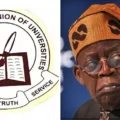

ASUU Warning Strike: How Alausa’s Reforms Could Change Everything
When the Academic Staff Union of Universities (ASUU) announced yet another warning strike on October 13, a familiar sense of anguish washed over me. It’s the anguish of postponed aspirations, interrupted advancement, and lost time. This sentiment is experienced by countless parents, students, and university staff who have endured the relentless cycle of disruption characterizing Nigeria’s public university system. For those of us whose lives are closely intertwined with education and who have suffered through the recurring rounds of strikes, interrupted semesters, and unfulfilled commitments, we understand all too well how every disruption affects not only the classroom but also the very essence of our nation.
However, this latest strike feels especially disheartening because it occurs at a moment when real progress has been achieved under the guidance of the Minister of Education, Dr. Tunji Alausa. I have been closely observing his methods, and in a recent essay, I praised his establishment of the expanded Mahmud Yayale Ahmed Negotiation Committee, describing it as “a proactive approach that could potentially end decades of academic disruption.” It was an encouraging moment—a sign that the long and tiring dialogue between ASUU and the Federal Government might be turning a significant corner. Yet, the strike still took place.
During an interview on Channels Television, Dr. Alausa explained calmly that the Federal Government had “addressed all demands of ASUU.” He spoke with factual evidence rather than mere words. He highlighted the N50 billion already allocated for Earned Academic Allowances, the N150 billion designated in the 2025 budget for Needs Assessment, and the management of postgraduate supervision allowances now directly overseen by universities. He clarified that promotion arrears and wage adjustments were already incorporated into the 2026 budget plan. In essence, concrete advancements were being made. Still, ASUU decided to move forward with a warning strike.
As I listened, I was reminded of John Dewey’s words, the American philosopher often seen as the pioneer of progressive education, who stated, “Education is not preparation for life, education is life itself.” If this holds, then every time our universities close down, we are not just halting academic functions; we are disrupting life itself. Each shutdown siphons energy from a system that is already battling to maintain its relevance in a rapidly evolving world.
What strikes me the most about Dr. Alausa’s management of this situation is his calmness. Instead of engaging in public conflict, he has opted for communication, transparency, and accountability. He has continuously provided updates on progress to Nigerians, ensuring that the negotiation process is open and traceable. His demeanor has been that of a person seeking solutions rather than a quest for triumph.
Under his leadership, there has been a noticeable and measurable shift in education reform. In contrast to previous administrations that made grand promises but failed to deliver, Alausa’s strategies and reforms are built on a foundation of structure and sustainability. The most groundbreaking of these initiatives is the new national curriculum, which was introduced earlier this year and has been praised by stakeholders as a necessary and courageous update to Nigeria’s basic and secondary education system.
This reform introduces a fresh perspective to Nigerian education: streamlined, skill-focused, and energized with innovative learning.
For years, Nigerian students have struggled under the burden of overloaded curricula—stuffed with outdated material that failed to equip them for the demands of today’s world or foster creative thinking. Alausa’s reform shifts that narrative. It condenses subjects to ease cognitive pressure, emphasizes critical thinking, communication, and digital literacy, and brings practical, skills-based learning into all levels of education.
The policy has garnered wide praise from educators, parents, and education professionals who consider it the transformation Nigeria has long awaited. It transitions education from rote memorization to true mastery, from theoretical excess to practical intelligence. As Alausa stated at the launch event, “We must prepare Nigerian children for the future they will encounter, not the one we have inherited.”
The new curriculum also includes AI literacy, environmental sustainability, entrepreneurship, and civic ethics, equipping students to excel in a global knowledge economy while remaining rooted in national values. It represents a significant shift in transforming classrooms from mere instructional spaces to hubs of innovation.
Following this curriculum transformation is the planned shift to Computer-Based Testing (CBT) for all major examinations, including NECO and WAEC, by 2026. This reform aims to restore integrity to Nigeria’s examination system, which has long suffered from malpractice and inefficiency. From my experience teaching and mentoring young learners, I have witnessed how CBT promotes fairness, transparency, and efficiency in assessments, which is essential for fostering trust in education.
Another notable initiative is the STEMM-Up Venture Grant, which aims to provide up to N50 million for student-led innovations in science, technology, engineering, mathematics, and medicine. For too long, our brightest thinkers have lacked institutional backing to develop transformative concepts. By offering financial support, the ministry has established a link between the classroom and the field of innovation.
The third reform that stands out to me is the Diaspora BRIDGE Platform, a digital network connecting Nigerian academics overseas with local universities to enhance research, mentorship, and faculty growth. This initiative is a strategic move to counteract brain drain and reintegrate global knowledge into our higher education system. As Dr. Dakuku Peterside remarked, this effort signifies “a conscious and commendable attempt to align global expertise with national goals.”
Equally important is the Inclusive Education Agenda, which aims to ensure that children with disabilities, internally displaced learners, and those impacted by insecurity are not marginalized. It reconceptualizes education as a right, not a privilege, and affirms a moral and constitutional duty.
Alausa has also launched plans to overhaul agricultural education, establishing a technical committee to redesign the curriculum so that graduates in agriculture can translate theory into practice, making a meaningful impact on food production and agribusiness. The reasoning is both simple and profound: education must contribute to national development rather than solely cater to individual aspirations.
To advance technical and vocational education, the ministry has created a TVET Data Dashboard, which has already logged more than 1.3 million registrations—clearly demonstrating a resurgence of public enthusiasm for skill-based education. In tackling funding shortfalls, Alausa highlighted over N250 billion in UBEC resources sitting idle at the state level, urging governors to place education ahead of political interests.
These initiatives together illustrate a comprehensive vision for educational change—one that merges technology, inclusivity, accountability, and innovation.
It’s important to acknowledge that no reformer works in isolation. Alausa took over a system wounded by years of neglect and skepticism. The 2009 ASUU-FGN Agreement continues to be a persistent issue that has haunted every administration since. However, his distinguishing feature is his readiness to face this legacy with integrity and discipline. I perceive in him a unique quality: empathy supported by factual evidence. When he claims, “Let me assure parents that we are doing everything humanly possible to keep your children in school,” I feel a sincerity rooted in understanding, not the typical political rhetoric often exhibited by many leaders. That promise is significant because it is backed by observable actions.
Aldous Huxley, an English novelist and philosopher, once remarked that, “Experience is not what happens to a man; it is what a man does with what happens to him.” This statement, from his 1932 work Texts and Pretexts, encapsulates a timeless truth about leadership, growth, and responsibility. Experience alone does not effect change; it is our reactions to experiences, the capacity to derive meaning and respond wisely, that defines maturity.
In numerous ways, Tunji Alausa exemplifies this lesson through his approach to Nigeria’s long and often draining educational challenges. Instead of resorting to the predictable narrative of blame and denial, he has opted to make meaningful use of the circumstances he faces: years of institutional neglect, distrust, and broken commitments. Through his quiet commitment and systematic reforms, he is transforming what was once a narrative of dysfunction into a framework for renewal. That type of leadership is significant.
For an extended period, Nigeria’s education sector has been trapped in cycles of conflict between the government and unions, as well as between reformers and resistors. Yet, Alausa’s strategy points to a distinct philosophy. He believes that genuine progress starts with consistent, evidence-driven actions. His leadership is founded on transparency and accountability, demonstrating that accountability should be seen as a strength rather than a weakness.
Nevertheless, if experience can guide reformers in rebuilding, it should equally prompt unions to reflect. ASUU must take time to consider its own history. The union’s original purpose of defending academic integrity and safeguarding the interests of scholars remains essential and admirable. However, the potency of that mission relies not just on persistence but also on perspective. When activism becomes routine and strikes a mere reflex rather than a thoughtful action, moral authority begins to diminish.
The union’s history—years of struggle, negotiations, and hard-fought concessions—should now fuel strategic collaboration rather than ongoing disruption. There is wisdom in adapting approaches to fit new circumstances. As the world evolves, so should the strategies of those who claim to represent it. Struggle aims to pave the way for new successes.
For ASUU, this is an opportunity to listen as much as to communicate, to collaborate as much as it advocates, and to align its objectives with the future it aspires to create. While strikes have their place, when they become routine, they risk alienating the very public that once sympathized with their cause.

DOWNLOAD EXAM SCHOLARS 2025 CBT APP ON THE PLAY STORE
DOWNLOAD EXAM SCHOLARS 2025 CBT APP ON THE APP STORE
DOWNLOAD EXAM SCHOLARS 2025 CBT APP ON WINDOWS
Visit EXAMSCHOLARS.COM for more info