
JAMB 2025 UTME Wahala: A Wake-Up Call We Can’t Afford to Ignore
When this year’s UTME kicked off, nobody saw what was coming. Candidates were ready, parents were hopeful, and schools had done their best, but a serious tech glitch, especially in Lagos and some parts of the South-East, turned the whole process into a mess. The Joint Admissions and Matriculation Board (JAMB), to be honest, dropped the ball.
Everything Scatter: What Happened?
Let’s not sugarcoat it—1.5 million students scored below 200 out of 400. That’s about 78% of everyone who sat for the exam. Only about 4,700 candidates scored above 320. That kind of result isn’t just low; it’s alarming.
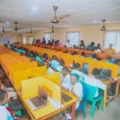
It didn’t take long for stories to start flying. Some CBT centers, particularly in Lagos and Owerri, were reportedly using outdated server software. The system kept crashing, exams were interrupted, and many students claimed their answers got scrambled or lost in the process.
To manage the situation, JAMB did something they’ve never done before—they scheduled a make-up exam for nearly 380,000 candidates. These retakes happened on May 16 and 18, a move that showed the board was at least trying to make things right.
Prof. Oloyede: Man of the Moment
One thing that stood out was how JAMB’s Registrar, Prof. Ishaq Oloyede, handled the matter. Instead of giving the usual Nigerian-style excuse of “it’s not our fault,” he did the unthinkable—he admitted the mistake.
He said, plainly, that the board failed in some areas. He apologized publicly and took full responsibility. That sort of honesty is rare in our public institutions, and many Nigerians respected him for it. If other agencies could follow this kind of transparent leadership, we might see real change.
The Real Issue? Nigeria’s Education System is Still Shaky
This UTME wahala didn’t just reveal a one-time tech failure. It exposed a much deeper rot:
-
Miracle centres still thrive— Some centers are still more focused on helping students “run” exams than delivering credible testing.
-
Biometric errors caused panic—the fingerprint verification that was meant to stop impersonation ended up delaying many candidates.
-
Many students still don’t know CBT—let’s face it, some of our candidates have never practiced with a computer before exam day. How do you want to take a pass like that?
-
Too much tech, too little training—we rushed into CBT, but the infrastructure and digital training didn’t catch up.
CBT as an idea is solid. It’s fast, reduces cheating, and can make result processing easier. But it won’t work if the system behind it is broken or if students aren’t even ready to use a computer.
Lessons Nigeria Must Learn (Sharp-Sharp)
This is not the time for blame games or online dragging. Here’s what JAMB (and Nigeria as a whole) should take away from this:
-
Own your mistakes quickly—JAMB was quick to begin a forensic audit. That’s how to do it.
-
Make up for the damage—retesting 380k students showed they cared enough to fix things.
-
Talk to the people— The registrar didn’t hide; he explained what went wrong and what they were doing about it.
-
Invest in readiness, not just tech—Before we roll out tech-driven exams, let’s make sure students, teachers, and CBT centers are ready.
Final Yarn
The 2025 UTME glitch was frustrating, no doubt. Many students felt cheated, and some are still struggling to recover emotionally. But it also gave us a rare moment of clarity. We can’t keep doing things halfway and expect excellence. Technology can’t fix poor planning or broken systems.
If JAMB can own up, fix their errors, and improve, then maybe—just maybe—other agencies can follow suit. That’s how we build a better Nigeria. Not with noise, but with action.

DOWNLOAD EXAM SCHOLARS 2025 CBT APP ON THE PLAY STORE
DOWNLOAD EXAM SCHOLARS 2025 CBT APP ON THE APP STORE
DOWNLOAD EXAM SCHOLARS 2025 CBT APP ON WINDOWS
VISIT EXAMSCHOLARS.COM for more info