
Past questions can improve your marks in JAMB, WAEC, and NECO—but only if you use them strategically. If you simply read, solve, and move on, you may keep repeating the same mistakes without noticing the pattern.
This guide shows you a practical, repeatable method called the Personal Exam Past-Questions System (PAQS). It helps you (1) identify weak topics, (2) diagnose why you got questions wrong, and (3) rebuild with targeted practice—so your revision becomes measurable and more effective.
Primary idea: Use past questions for diagnosis, not only practice
In Nigerian exam preparation, many students treat past questions like “content to read.” The problem is that reading and solving without a review structure does not clearly answer:
- Which topics are truly weak?
- What mistakes keep repeating?
- How should I adjust my next practice?
PAQS is built to force you to answer those questions every time you practice.
Why students get stuck when using past questions
Before the system, let’s correct common habits that hold many candidates back:
- Reading past questions like notes instead of treating them as practice.
- Marking once and never returning to learn from the wrong answers.
- Mixed practice with no records—so you cannot tell what caused a low score.
- No time control—you may “finish” questions during practice but fail to build exam-like speed and accuracy.
- Reviewing wrong answers emotionally (just accepting the mistake) instead of analyzing the reason.
PAQS fixes these problems with a clear routine: Sort → Practice → Diagnose → Rebuild.
The PAQS model (Personal Exam Past-Questions System)
PAQS runs each time you open any past question set. It has four parts:
- Sort past questions by topic.
- Practice with a consistent scoring rule.
- Diagnose mistakes into error types.
- Rebuild using targeted drills and a short review loop.
Think of PAQS like training for a match: you don’t only play—you also review performance and train weak areas.
Step-by-step: How to build your PAQS system
Step 1: Sort past questions by topic (5–10 minutes per set)
Before solving, take a few minutes to label the questions by topic. This can be done in a notebook, a simple table, or a sheet.
Create “topic buckets” that reflect how exams group questions. For example:
- JAMB: Algebra, Functions, Equations, Rates/Work, comprehension passages, Nigerian history, grammar rules (as applicable to your preparation).
- WAEC/NECO Biology: Cell structure, ecology, genetics, human physiology (as applicable).
- WAEC/NECO English: comprehension, summary, grammar, tenses, direct/indirect speech (as applicable).
When you attempt questions, add quick labels to track outcomes:
- C = Correct
- W = Wrong
- S = Skipped
Key point: You are sorting so your revision later becomes specific—not just “to be neat.”
Step 2: Practice with a scoring rule (accuracy or time, but consistent)
After sorting, practice using one consistent scoring method. Choose one:
- Option A (Accuracy-focused): correct = 1, wrong = 0, skipped = 0.
- Option B (Time-focused): set a personal time limit, then score: correct = 1, wrong = 0, skipped = 0. Later, compare whether you improved speed along with accuracy.
For candidates writing JAMB CBT style objective questions, working under time pressure matters. If you do not know the exact seconds per question, you can still set a personal limit and build from there.
When you finish, compute your results clearly. For example:
- Total questions: 40
- Correct: 22
- Wrong: 12
- Skipped: 6
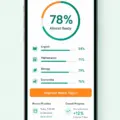
- Accuracy: 22/40 = 55%
This score becomes your baseline for the next cycle.
Step 3: Diagnose mistakes into error types (this is where marks improve)
After marking, don’t stop at “wrong.” PAQS forces you to name the reason behind each wrong answer. Use these error types (keep them simple and repeatable):
- Concept Error: you don’t understand the rule/formula.
- Method Error: you know the concept but used the wrong approach/process.
- Calculation/Copy Error: arithmetic slips, missed symbols, misread numbers.
- Language/Comprehension Error: you misunderstood wording or key terms (common in English and comprehension-based questions).
- Test Technique Error: time mismanagement, rushing, guessing without eliminating options.
Then tag each wrong question with its error type. Example:
- Q12: Wrong → Method Error
- Q28: Wrong → Calculation/Copy Error
- Q35: Wrong → Language/Comprehension Error
Why this matters: Once you know your error pattern, your next practice stops being random.
Step 4: Rebuild using targeted drills (review correctly, not emotionally)
Rebuilding does not mean repeating the whole set again. Instead, select the areas that caused low performance—your wrong questions and their weak topics.
Use a short three-layer rebuild for each problem area:
- Layer 1: Learn the correct rule (1–2 minutes per question). Write the key idea in one line.
- Layer 2: Redo the question without peeking. If you still fail, tag the error type again.
- Layer 3: Do similar questions from the same topic (2–5 questions). This trains the pattern, not only one question.
Practical example (how to use error diagnosis): If you repeatedly miss genetics questions due to Method Error, don’t just study “Biology” generally. Focus on genetics problem types and redo only that subtopic pattern.
How to apply PAQS to JAMB, WAEC & NECO
Using PAQS for JAMB CBT (objective questions)
JAMB preparation often depends on:
- Concept clarity (especially in subjects like Mathematics and English sections).
- Test technique (elimination, avoiding careless mistakes).
- Speed with accuracy.
How to apply PAQS in practice:
- After each set, check which error type repeats. If Test Technique Error repeats, your next session should train elimination and time management.
- If you get English/comprehension-based questions wrong, treat them as Language/Comprehension Error and practice careful reading before choosing options.
- For Mathematics wrong answers, separate Method Error from Calculation/Copy Error. Many students mix them, making their correction unclear.
Using PAQS for WAEC/NECO (mixed papers and structured responses)
WAEC and NECO preparation is not only theory. PAQS should match the exam style you are writing.
Apply the same diagnosis idea to objective and structured parts:
- Objective questions: use error types to identify what is failing you.
- Essay/structured questions: if your answers are wrong, diagnose using Concept/Method/Test Technique ideas. For example, failing to include required points can be treated as a Test Technique Error in structured response handling.
- Practical components (where applicable): don’t only read answers. Build a checklist for typical procedures/observations/calculation steps, then practice short responses and tag mistakes.
PAQS helps practical preparation because you repeatedly practice the same practical pattern and record the specific steps you keep missing.
PAQS template (copy this to your notebook)
If you want to start immediately, use this template for each practice set:
PAQS Sheet (per practice set)
- Date: ____
- Exam: JAMB / WAEC / NECO
- Subject: ____
- Topic bucket(s): ____
- Set questions: ____ (e.g., 40 questions / 3 topics)
- Result: Correct __ / Wrong __ / Skipped __
Error log (5–10 lines max)
- Q#: ____ → Wrong → Error type: Concept/Method/Calculation/Language/Test technique
Rebuild plan
- Next session focus (topic): ____
- Next drills: redo wrong questions + 2–5 similar questions from the same topic
- One rule I must remember: ____
What this means for students
If you run PAQS consistently, you should expect improvement that you can track:
- Weak topics become visible because you sorted by topic.
- Your mistakes become predictable because they are categorized into error types.
- Review becomes shorter but more effective since you redo only wrong areas and add similar drills.
- Confidence improves because each session produces a score and a rebuild plan.
- Guessing reduces because you create a repeatable approach for handling tricky questions (especially through test technique practice).
What students should do next (simple action plan)
- Choose one subject to improve first (e.g., JAMB Mathematics or WAEC English Language).
- Pick one past questions set you can complete in one sitting.
- Create your PAQS sheet using the template above.
- Solve and score using one consistent scoring rule.
- Log every wrong question and tag the error type.
- Redo only your wrong questions using the three rebuild layers, then add 2–5 similar questions from the same topic.
- Repeat for 2–3 weeks and compare early-session accuracy to later-session accuracy.
You don’t need to change everything at once. Even one subject can show noticeable results when PAQS is followed step-by-step.
FAQ
1. Do I need new past questions every time?
No. PAQS focuses on review and diagnosis. You can use the same material repeatedly as long as you rebuild your weak areas using your error log.
2. How many questions should I do per PAQS session?
Start with a number you can complete properly. A practical range for many candidates is 25–50 questions per session (or a manageable set of structured questions). The priority is scoring, logging errors, and rebuilding.
3. What if my score is still low after correcting wrong answers?
Check your error types. If you keep making Method Errors, study and redo the same question pattern multiple times. If you keep making Calculation/Copy Errors, slow down slightly and re-check the steps you use to compute and copy answers.
4. Should I practice mixed topics or only one topic?
Use both wisely. Mixed topics can help you handle exam-like variety. But improvement requires the rebuild phase to be topic-focused based on how you sorted and logged your errors.
5. Does PAQS work for essay subjects and not only CBT?
Yes. For structured responses, diagnose mistakes with the same framework. For example, if you omit required points, it can be treated as a Test Technique Error. If you don’t understand the principle, it’s a Concept Error. Then rebuild using a checklist of expected content/points.
6. How do I reduce fear before exams?
Fear reduces when you have evidence of progress. Your PAQS score sheet and error log give you proof that you are improving and show exactly what you will practice next—so you stop feeling lost.
Conclusion
To score higher in JAMB, WAEC, and NECO, don’t only “do past questions.” Use the PAQS system: sort by topic, score consistently, diagnose error types, and rebuild with targeted drills. When your practice becomes measurable and your weak areas are treated directly, improvement follows naturally.
Start small today: pick one subject, run one PAQS session, write your rebuild plan, and continue for 2–3 weeks. Your revision will become clearer, faster, and more effective.