

On Monday, June 29, 2026, the Federal Executive Council (FEC), presided over by President Bola Tinubu, approved sweeping reforms to the National Youth Service Corps (NYSC), the most comprehensive review of the scheme since it was created in 1973.
Minister of Youth Development Ayodele Olawande announced the approval of the NYSC reforms on X following the FEC meeting, calling it a landmark step toward repositioning NYSC for national development and youth empowerment.
The goal, according to officials, is to transform NYSC from a programme built mainly around mobilisation and national unity into one that is skills-driven, productivity-focused, and aligned with President Tinubu’s ambition of building a $1 trillion economy.
The NYSC Reform 2026 Process
The NYSC reform process actually began in 2025, through consultations involving the Ministry of Youth Development, the Ministry of Education, and the Office of the Special Adviser to the President on Policy and Coordination.
It responds to long-standing complaints about the scheme: unsafe deployments to insecure areas, an outdated orientation curriculum, mismatches between corps members’ postings and their actual skills, weak welfare provisions, and a sense that a year of service offered limited long-term value.
The Key Changes of the NYSC Reform
The NYSC Reforms 2026 contain the following major changes:
Civilian leadership.
For the first time in NYSC’s history, the scheme will be headed by a civilian Director-General rather than a serving military officer. The Nigerian military will still handle security for corps members nationwide. Special Adviser Hadiza Bala Usman was explicit on this point:
“The safety aspect of our corps members still remains with the military. The operational leadership of the NYSC will be civilian-led, but security will continue to be anchored and implemented by the Nigerian military.”
A longer, restructured NYSC orientation camp.
The NYSC Orientation camp is being extended from three weeks to six weeks orientation, split into three two-week phases. The first phase covers civic responsibility, leadership, and national values; the second covers entrepreneurship, financial literacy, and business planning; the third delivers specialised training tied to each corps member’s chosen career stream.
Eleven specialised career streams.
Corps members will select one of eleven specialised career streams at registration; with training and deployment to a PPA shaped by that choice, their academic background, and career interests.
The 11 streams include:
- Agric Corps: agribusiness, food production, and agricultural innovation
- Medical Corps: healthcare professionals
- Education Corps: graduates supporting teaching and learning
- Tech and Digital Corps: coding, digital innovation, AI, and emerging technologies
- Legal Corps: law graduates supporting justice-related institutions
- Public Service Corps: policy, governance, and civil service functions
- Infrastructure Corps
- Green Corps
- Enterprise Corps
- Creative Economy Corps
- Paramilitary and Security Corps
Skills-based primary assignments.
Postings are meant to align more closely with what corps members actually studied and want to do, rather than the often-arbitrary placements of the current system.
Risk-sensitive Deployment.
For the first time, prevailing security conditions in different parts of the country will be formally factored into where corps members are posted. Thus is a direct response to years of concern about corps members being sent into volatile areas.
Technology-driven, fully digital call-up
The paper-heavy mobilisation process is being replaced with a digital system intended to improve efficiency and transparency in how prospective corps members are called up.
National camp grading and certification
A standardisation system will assess orientation camps across states, with the government pushing for “standard orientation camps” nationwide through closer collaboration with state governments. Sub-standard or non-standard orientation camps will be closed.
New graduation ceremony and uniform.
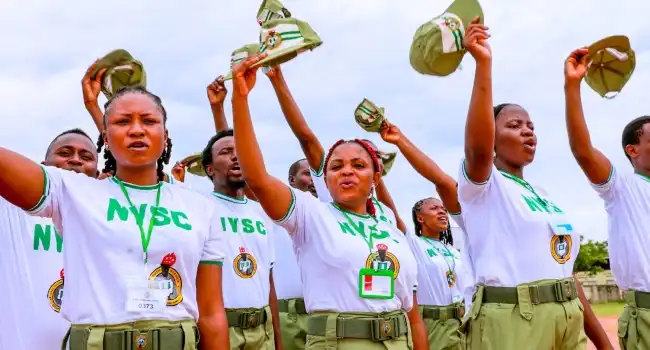
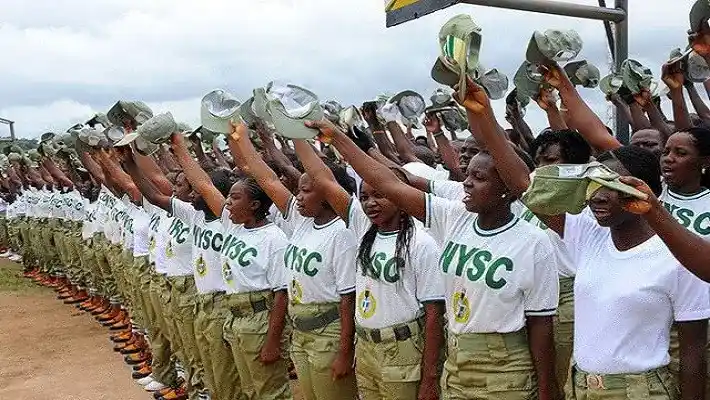
The traditional Passing Out Parade which is long associated with the scheme’s paramilitary roots, is being scrapped in favour of a formal graduation ceremony. Corps members will also get a redesigned uniform intended to project professionalism rather than a militarised look.
A possible Digital Corps
Specialised groups, potentially including a dedicated Digital Corps, may receive additional training (3-6 months) leading to professional certifications before deployment.
What Remains The Same Despite the NYSC Reforms
Despite the scale of the changes, the one-year service duration is not being touched. Officials have been clear that flexible, skills-based training will be woven into the existing year rather than extending or shortening it. The reforms also will not apply retroactively to people who have already completed service or are currently serving under the old system.
Important Notice to PCMs
Because much of NYSC’s structure is enshrined in law, the FEC has directed the Attorney-General of the Federation, Lateef Fagbemi, working with the Ministry of Youth Development, to begin amending the NYSC Act and its regulations. This legal groundwork is necessary before most of the changes can take effect, so implementation timelines will depend on how quickly that legislative process moves.
Major Reason for the NYSC Reform
NYSC was established after the Nigerian Civil War specifically to foster national unity by sending university graduates to serve outside their home regions. Olawande framed the reform as preserving that core mission while adding economic substance to it:
“We are transforming the scheme into a platform that not only unites Nigeria but also equips our young people with the skills, experience and opportunities they need to thrive in a fast-changing world.”
For prospective corps members, the practical implications of the NYSC Reforms are fairly concrete: safer postings, training that’s actually relevant to their field, a longer but more substantive orientation, and a credential that officials hope will carry more weight than the current NYSC certificate. Whether the reforms deliver on that promise will depend heavily on execution and how quickly the legal amendments needed to implement them make their way through government.
Follow Exam Scholars for more verified news and updates!